Brain and cognition
The PANIC Study has assessed cognition, academic skills and educational plans and attainment from childhood to young adulthood. In addition, brain structure and function were assessed in a substudy. These data allow us to investigate how physical activity, sedentary behaviour, cardiorespiratory and motor fitness, diet, sleep and cardiometabolic health are related to brain health, cognition and learning across development.
Non-verbal reasoning (Raven’s Progressive Matrices)
Non-verbal reasoning was assessed using Raven’s Coloured Progressive Matrices at baseline (6–9 years) [and at the 2-year follow-up]. The test includes 36 items. In each item, the child chooses the piece that completes a visual pattern. The test measures fluid intelligence and abstract reasoning and depends little on language skills or prior knowledge. The outcome is the number of correct answers. In PANIC analyses, the test is used both as an outcome and as a covariate describing children’s general cognitive ability.
Reading and arithmetic skills (First Steps Study)
Academic skills in Grades 1–3 were assessed with the First Steps Study (Alkuportaat), a longitudinal study of learning and motivation led by the University of Jyväskylä. The measures were group-administered standardised tests carried out at school by trained researchers:
- Reading fluency: timed tests of word reading and word segmentation, such as word list reading and word chain tests [check subtests and time limits].
- Reading comprehension: a standardised Finnish reading comprehension test (ALLU) [check version by grade].
- Arithmetic skills: the Basic Arithmetic Test. Children have three minutes to solve as many addition and subtraction problems as possible.
These data allow longitudinal analyses of how lifestyle factors and physical fitness are related to the development of literacy and numeracy during the first school years.
Cognitive functions (Cogstate)
Cognitive functions were assessed using the computerised Cogstate test battery at the [8-year follow-up (15–17 years) / 16-year follow-up]. The tasks cover several cognitive domains [keep only the tasks that were actually used]:
- Psychomotor function: Detection task
- Attention: Identification task
- Working memory: One Back task
- Visual learning and memory: One Card Learning task
- Executive function and spatial problem solving: Groton Maze Learning Test
The main outcomes are reaction time and accuracy. The tasks are largely independent of language and culture, and they are sensitive to small differences in cognitive performance.
Brain structure and function (FitBrain substudy)
Brain structure and function were assessed in the FitBrain Study, a substudy of PANIC, in 2018–2019 among 45 PANIC participants aged 18–19 years.
- Brain structure: three-dimensional T1-weighted magnetic resonance imaging (3 Tesla) was used to quantify regional grey matter volumes, including cerebellar grey matter and its lobules, and cortical thickness.
- White matter microstructure: diffusion tensor imaging was used to measure fractional anisotropy and mean, axial and radial diffusivity.
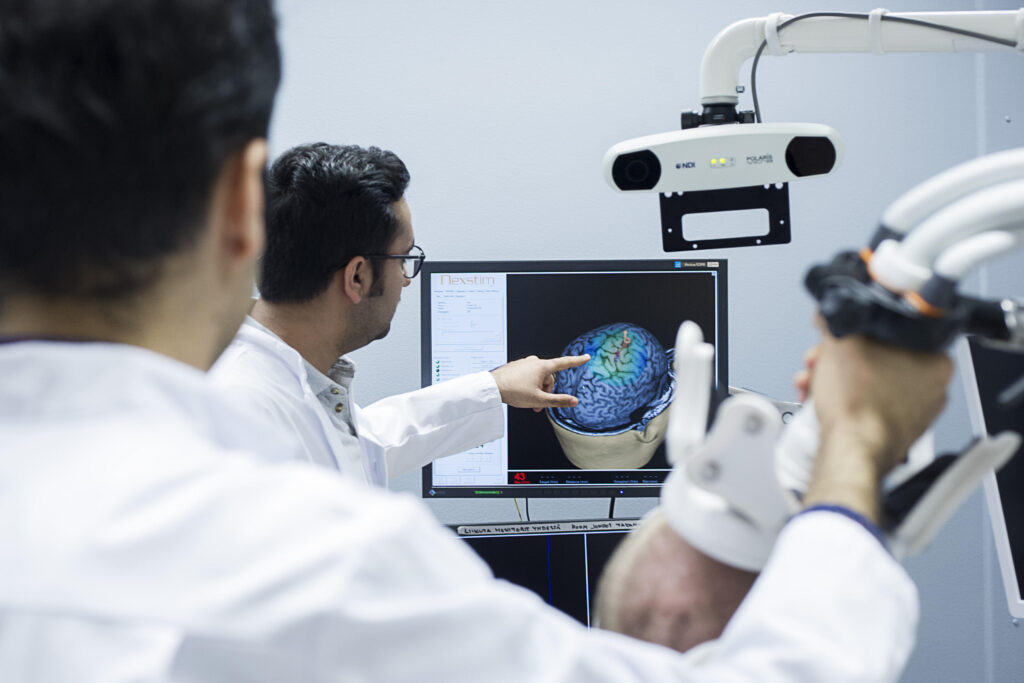
- Motor cortical function: navigated transcranial magnetic stimulation was used to measure resting motor threshold, motor-evoked potential amplitude, cortical silent period, silent period threshold and long-interval intracortical inhibition.
Together with the longitudinal data from childhood, these measures allow us to study how physical activity, fitness and cardiometabolic health during growth are related to brain morphology, white matter microstructure and cortical neurophysiology in late adolescence.
Educational plans and attainment
At the 8-year follow-up (15–17 years), participants reported their educational plans by questionnaire. These included the type of upper secondary education they planned to attend (general upper secondary school or vocational school) and the highest level of education they aimed for. At the 16-year follow-up, we ask about current studies, completed qualifications and the field of education [check items]. Together with cognition and academic skills, these data allow us to study whether physical activity, fitness and other lifestyle factors in childhood and adolescence predict educational trajectories into young adulthood.