Adipose tissue multiomics
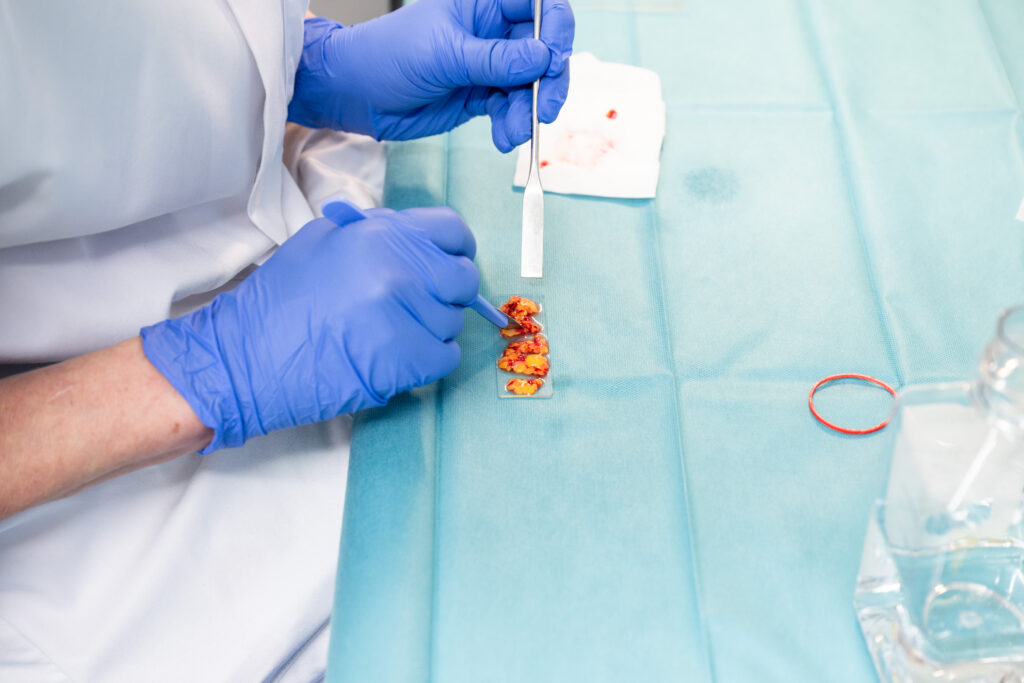
The PANIC Fat Biopsy Study was conducted as part of the early-adulthood follow-up of the PANIC Study. Subcutaneous adipose tissue samples were collected from young adults aged 23-25 years to investigate the cellular and molecular mechanisms regulating adipose tissue function and their relationships with insulin resistance, other disturbances in glucose and lipid metabolism, and liver fat accumulation. Advanced multiomics technologies will be used to characterize adipose tissue cellular composition, gene regulation, and metabolic function.
Single-nucleus transcriptomics and epigenomics. Single-nucleus RNA sequencing (snRNA-seq) and assay for transposase-accessible chromatin sequencing (snATAC-seq) will be used to identify adipose tissue cell populations and characterize cell-type-specific gene expression and chromatin accessibility. These analyses will help identify regulatory networks involved in adipocyte differentiation, lipid metabolism, insulin signaling, inflammation, and cellular stress responses.
Spatial transcriptomics. Spatial gene expression analyses will be used to investigate the organization of adipose tissue cell populations, their local microenvironments, and interactions among different cell types.
Targeted metabolomics. Targeted liquid chromatography–mass spectrometry (LC-MS)-based metabolomic profiling of subcutaneous adipose tissue will be used to characterize metabolic pathways involved in adipose tissue function and dysfunction. These measurements will be integrated with circulating metabolomic profiles to investigate links between adipose tissue metabolism and systemic metabolic health.
Proteomics. Circulating proteomic profiles and, where feasible, complementary subcutaneous adipose tissue protein analyses will be used to investigate molecular pathways associated with adipose tissue function and metabolic health.
Multiomic integration. Transcriptomic, epigenomic, metabolomic, and proteomic data will be integrated with genome-wide genetic information to identify regulatory mechanisms and molecular networks associated with adipose tissue function and dysfunction.
A major strength of the PANIC Fat Biopsy Study is the availability of extensive longitudinal data on physical activity, diet, growth, body composition, and cardiometabolic health from mid-childhood through late childhood and adolescence into early adulthood. Combining these life-course data with adipose tissue multiomics, systemic metabolic profiling, abdominal subcutaneous and visceral fat and liver fat imaging, and experimental validation in adipose cell models will help identify early cellular and molecular mechanisms linking adipose tissue dysfunction with insulin resistance, other disturbances in glucose and lipid metabolism, and liver fat accumulation.