About the PANIC Study
Design and participants
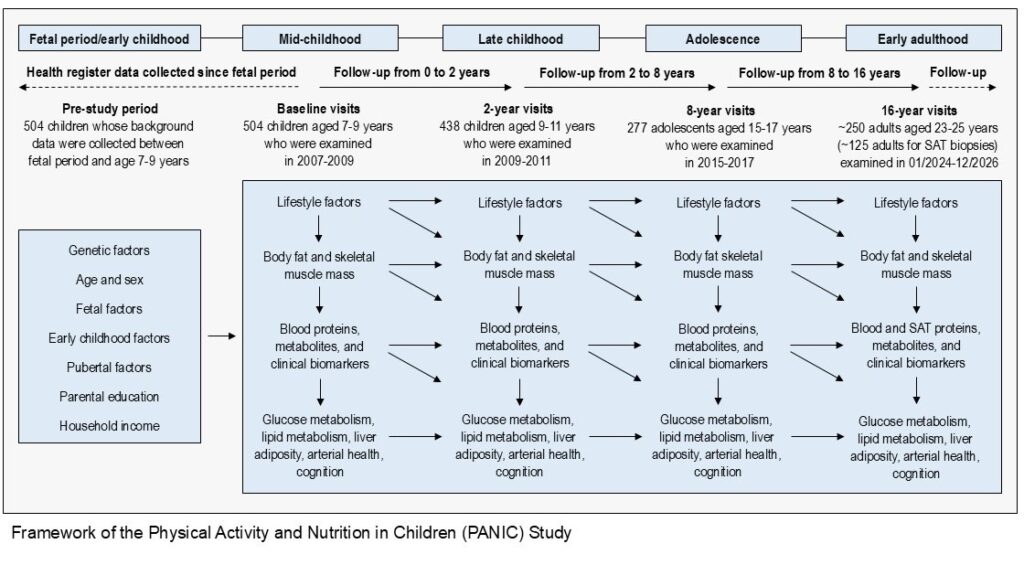
The PANIC Study is a long-term lifestyle intervention and follow-up study in a population-based cohort from Kuopio, Finland (ClinicalTrials.gov NCT01803776). A total of 504 children aged 7–9 years participated in the baseline examinations in 2007–2009 and underwent extensive phenotypic assessments and blood sampling for biomarker analyses. The children were allocated to either a combined physical activity and dietary intervention group or a control group.
During the first two years, the physical activity and dietary intervention comprised six counselling visits at 0.5, 1.5, 3, 6, 12, and 18 months after baseline. Each visit included individualized physical activity and dietary counselling for the children and their caregivers. The control group received general verbal and written advice on physical activity and diet at baseline but no individualized lifestyle counselling.
A total of 438 children aged 9–11 years participated in the 2-year follow-up examinations in 2009–2011, which included the same comprehensive assessments and blood sampling as at baseline. The intervention was continued until the 8-year follow-up, with counselling visits 2, 3, 4, 5, 6, and 7 years after baseline. At the 8-year follow-up in 2015–2017, 277 adolescents aged 15–17 years underwent comprehensive phenotypic assessments and blood sampling. In addition to measurements performed at the earlier study phases, the assessments included a 2-hour oral glucose tolerance test, carotid artery ultrasonography, impedance cardiography, and cognitive testing.
The 16-year follow-up was conducted in 2024–2026, when the participants were 23–25 years of age. It included most assessments performed at the previous study phases, including the 2-hour oral glucose tolerance test and detailed cardiovascular phenotyping, as well as new measurements to characterize metabolic health in adulthood. These included magnetic resonance imaging of abdominal visceral and subcutaneous adipose tissue and the liver, as well as liver magnetic resonance spectroscopy.
As part of the PANIC Fat Biopsy Study, the participants were also invited to a separate visit for the collection of subcutaneous adipose tissue samples, using a protocol based on that applied in the Finland–United States Investigation of NIDDM Genetics (FUSION) Study.
Together, these repeated assessments provide extensive longitudinal phenotypic and biomarker data spanning mid-childhood, late childhood, adolescence, and early adulthood.