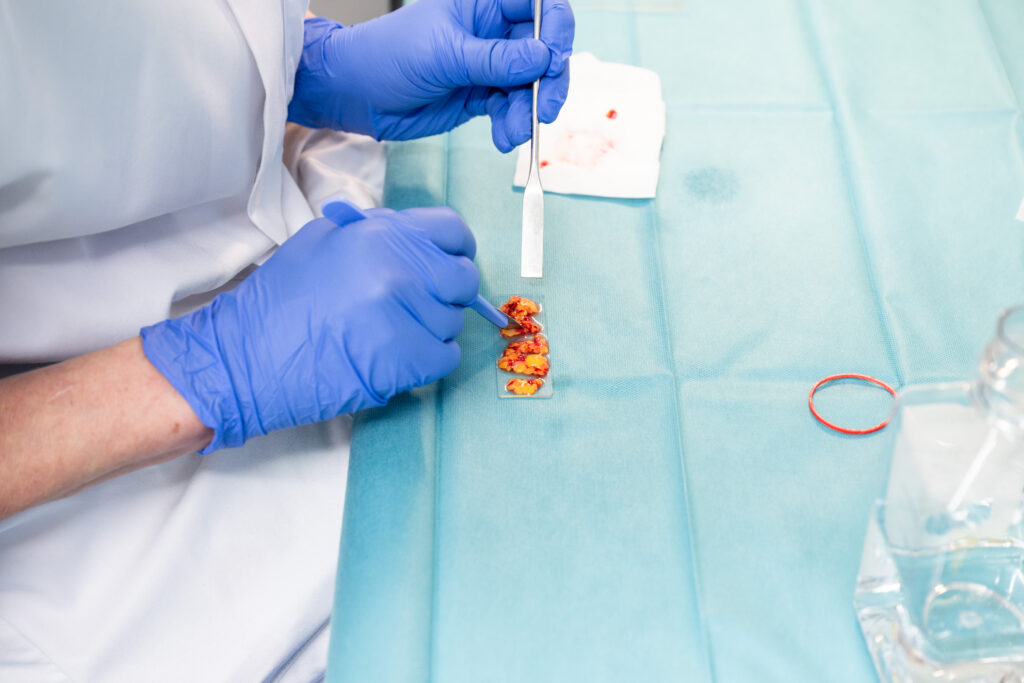
Adipose tissue multiomics
The PANIC Fat Biopsy Study is part of the early-adulthood follow-up of the Physical Activity and Nutrition in Children (PANIC) Study. Subcutaneous adipose tissue (SAT) biopsies are collected from young adults to investigate the cellular and molecular mechanisms regulating adipose tissue function and their contributions to systemic glucose and lipid metabolism, insulin resistance, and liver fat accumulation.
We will apply advanced multiomics technologies to characterize the cellular composition, gene regulatory networks, and metabolic functions of SAT, including:
- Single-cell epigenomics and transcriptomics: Single-nucleus ATAC sequencing (snATAC-seq) and RNA sequencing (snRNA-seq) will be used to identify adipose tissue cell populations and characterize cell-type-specific gene expression profiles and regulatory networks involved in adipogenesis, lipid metabolism, insulin signaling, and inflammation.
- Spatial transcriptomics: Spatial gene expression profiling will be used to investigate the organization of adipose tissue cell populations, their microenvironments, and cell–cell interactions.
- Metabolomics: Targeted metabolomic profiling of adipose tissue and circulating metabolites will be used to characterize metabolic pathways involved in adipose tissue function, systemic metabolism, and adipose tissue–liver interactions.
- Proteomics: Complementary proteomic analyses may be used to characterize proteins and molecular pathways regulating adipose tissue function and dysfunction.
- Multiomics integration: Molecular profiles will be integrated with genome-wide genetic data to identify regulatory mechanisms and molecular networks underlying adipose tissue function and metabolic health.
A particular strength of the PANIC Fat Biopsy Study is the availability of comprehensive longitudinal data on growth, body composition, lifestyle, and cardiometabolic health from childhood through adolescence into early adulthood. Integrating these data with adipose tissue multiomics and experimental validation in adipose cell models will help identify early molecular mechanisms linking adipose tissue dysfunction to insulin resistance, type 2 diabetes (T2D), and metabolic dysfunction-associated steatotic liver disease (MASLD).